
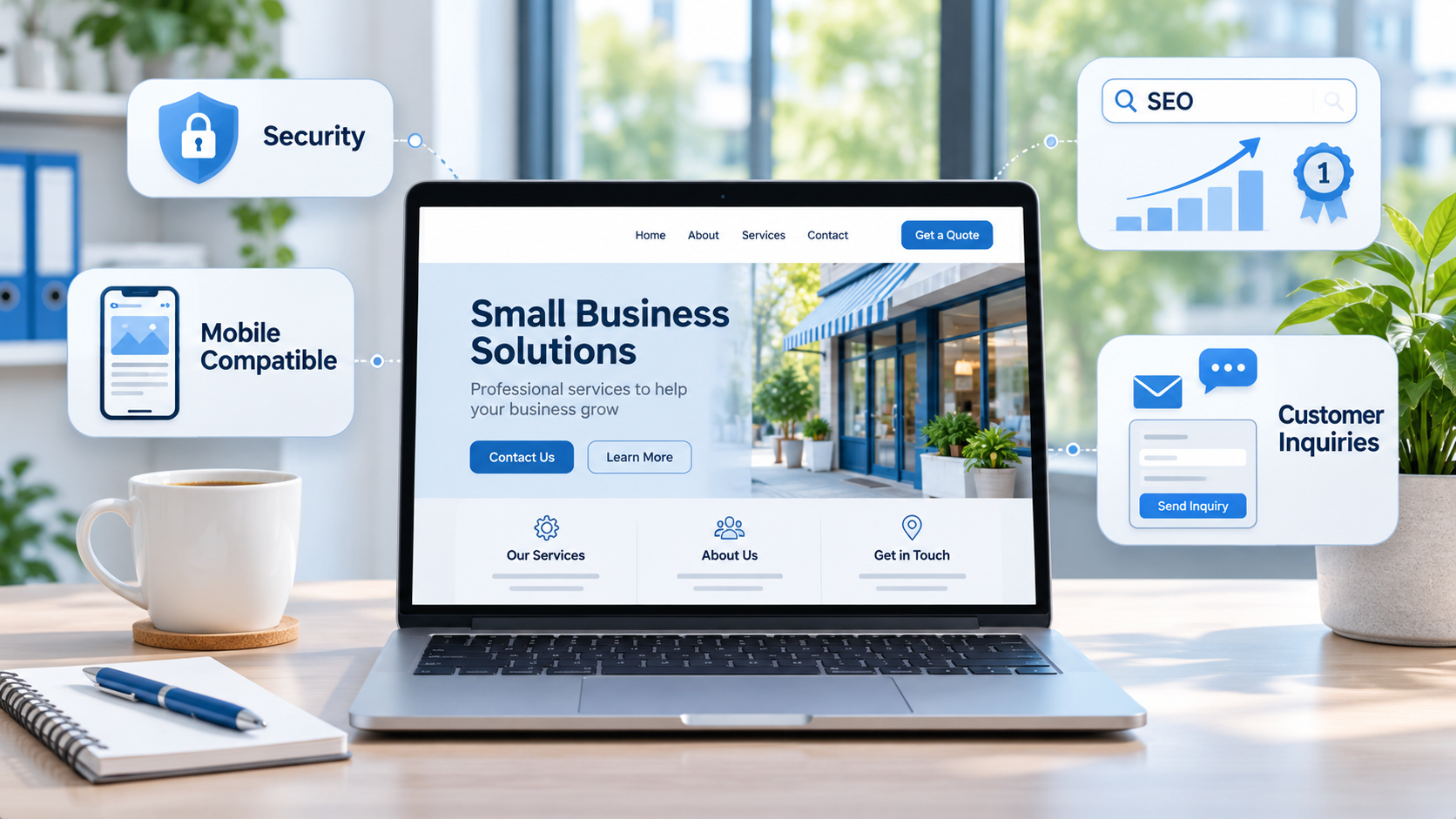
7 Proven Website Essentials Every Small Business Needs
A professional website is more than an online business card. It is one of the most important digital assets a small business can build.
Whether you operate a local business in the Philippines or serve customers internationally, your website often becomes the first place potential customers learn about your products, services, and credibility.
However, having a website doesn’t automatically mean it’s helping your business grow.
Some websites look attractive but fail to communicate what the business offers. Others make it difficult for visitors to find information, access services on mobile devices, or submit an inquiry.
So, what makes a business website effective?
Although every business has different requirements, certain website fundamentals consistently support a better visitor experience.
Here are seven proven website essentials every small business should consider when building or improving its online presence.
1. A Clear and Professional Homepage
Your homepage is often the first impression potential customers have of your business.
Therefore, visitors should quickly understand what your company does, who it serves, and what they can do next.
A common mistake is focusing heavily on attractive graphics while overlooking clear communication.
For example, imagine visiting a construction company’s website filled with impressive photographs but no clear explanation of its services.
Does the company specialize in residential construction, commercial projects, or renovations?
Without this information, visitors may struggle to determine whether the business meets their needs.
What should your homepage include?
An effective homepage should communicate your main services, business value, target customers, and recommended next steps.
It should also have easy-to-use navigation and clear calls to action, such as “Request a Quote” or “Contact Us.”
Most importantly, avoid overwhelming visitors with unnecessary information.
The goal is simple: help visitors understand your business and confidently explore your services.
2. Dedicated Service or Product Pages
Your homepage introduces your business, but service and product pages explain what customers can expect.
For example, a digital solutions company may provide website development, web hosting, website maintenance, and business automation.
Although these services are related, they address different customer needs.
Therefore, dedicated pages help visitors understand each service without searching through lengthy descriptions.
What makes a strong service page?
A professional service page should explain the service, its benefits, the problems it addresses, and the next step for interested customers.
Additionally, businesses can include relevant examples, frequently asked questions, and service-specific information.
For retail businesses, product pages should provide accurate descriptions, relevant specifications, and clear purchasing or inquiry instructions.
However, not every business needs dozens of pages.
A smaller website with well-organized content can be more effective than a large website containing repetitive information.
Quality and clarity should take priority over the number of pages.
3. Mobile-Friendly Design and Easy Navigation
Today, potential customers may discover your website through Google Search, social media, online advertisements, or shared links.
Many will access it using a smartphone.
Consequently, your website should work smoothly across mobile phones, tablets, laptops, and desktop computers.
A website that looks impressive on a large screen may become frustrating when viewed on a smaller device.
Common problems include text that requires zooming, difficult navigation menus, overlapping content, and buttons that are too small to tap comfortably.
Why does responsive design matter?
Responsive design allows website layouts to adjust to different screen sizes.
For instance, a potential customer browsing a restaurant’s website should be able to view its menu, find its location, and contact the business using a mobile device.
Similarly, someone exploring a professional services website should be able to submit an inquiry without unnecessary difficulty.
Google also recommends responsive web design as a practical approach to maintaining mobile-friendly websites.
However, mobile compatibility is not only about search engine visibility. It is about providing a convenient customer experience.
Accessibility is equally important
Professional websites should consider readable text, sufficient color contrast, keyboard navigation, and descriptive image alternatives.
These improvements can make information easier to access for a wider range of visitors.
A good website should be usable by the people visiting it, regardless of their device.
4. Fast Loading Speed and Reliable Website Performance
Website visitors expect pages to respond without unnecessary delays.
When a website loads slowly, visitors may become frustrated before they even reach important information.
Several issues can affect performance, including oversized images, excessive plugins, unnecessary scripts, and unsuitable hosting configurations.
How can you improve website speed?
Start by optimizing large images, reviewing unnecessary website components, and evaluating hosting performance.
Additionally, regularly test important pages after introducing new features or plugins.
Google’s Core Web Vitals provide useful measurements for evaluating loading performance, responsiveness, and visual stability.
For example, Largest Contentful Paint measures how quickly the main visible content loads.
You can evaluate your website using Google PageSpeed Insights.
Although good performance scores are helpful, they do not automatically guarantee higher search rankings or more customer inquiries.
Instead, they provide information that can guide improvements.
A fast, reliable website helps create a smoother experience for potential customers.
5. Credibility and Trust-Building Information
Before contacting an unfamiliar business, customers often want reassurance that the company is legitimate and capable of delivering its services.
Your website should help answer those concerns.
For example, imagine comparing two service providers.
The first website includes only a short description and a contact form.
The second explains the company’s background, shows relevant work, and provides clear business information.
The second website may give visitors greater confidence because it offers more information to evaluate.
What information helps build trust?
Consider including a clear About Us page, accurate contact information, genuine customer testimonials, relevant project examples, and transparent service descriptions.
Furthermore, explain how customers can work with your business and what they should expect after making an inquiry.
For businesses serving particular cities or regions, clearly identify your service coverage.
International service providers may also benefit from explaining communication arrangements and geographic availability.
However, avoid fabricated testimonials, exaggerated accomplishments, or unsupported claims.
Trust grows when visitors encounter accurate information, transparency, and professional communication.
6. Clear Calls to Action and Effective Contact Forms
A visitor may understand your services and trust your business but still leave without making an inquiry.
Sometimes, the reason is surprisingly simple: the website makes communication difficult.
Contact forms may request too much information, buttons might be difficult to find, or messages may fail to reach the business.
Therefore, every professional website should provide clear and reliable contact options.
Make inquiries simple
For example, a service company’s initial inquiry form may only need the customer’s name, email address, service of interest, and message.
Additional project details can be collected during the consultation process.
Depending on your business, alternative communication options might include telephone, email, Messenger, or WhatsApp.
However, offering too many competing options can also confuse visitors.
Choose communication channels your team can manage effectively.
Consider smarter lead management
As inquiry volume grows, businesses may benefit from automated notifications, structured forms, or customer relationship management integrations.
These tools can help organize customer information and improve follow-up workflows.
Nevertheless, automation should be introduced only when it supports genuine business requirements.
For more examples of website problems that can affect inquiries, read our related article: 5 Signs Your Business Website Is Losing You Potential Customers.
The best contact process makes communication easy for customers and manageable for your business.
7. SEO Foundations, Website Security, and Ongoing Maintenance
A professional business website should remain useful beyond its launch date.
To support long-term performance, businesses should consider search visibility, security, and ongoing maintenance.
Search Engine Optimization (SEO)
SEO helps search engines discover and understand website content.
Important foundations include descriptive page titles, clear headings, relevant information, logical internal links, and mobile-friendly layouts.
For example, a business offering accounting services should clearly explain those services using language potential customers understand.
Google’s SEO Starter Guide provides useful recommendations for improving website discoverability.
However, SEO is an ongoing process. Publishing a website does not guarantee immediate search rankings.
Website security
Security is another important consideration.
Businesses should use HTTPS, secure account credentials, appropriate access controls, backups, and software updates suited to their website environment.
Furthermore, websites that collect personal information should provide appropriate privacy disclosures and follow applicable data protection requirements.
Ongoing website maintenance
Even after launch, websites may require technical updates, monitoring, troubleshooting, and content improvements.
For example, websites powered by WordPress may need regular updates to themes, plugins, and the underlying platform.
At ArdyOnline, we understand that maintenance and support requirements vary depending on website complexity, business operations, and technical needs.
Therefore, service recommendations and quotations are based on the requirements of each client.
A professional website is an ongoing business asset, not simply a one-time design project.
How to Choose the Right Website Features for Your Business
Although these seven essentials provide a strong foundation, not every business requires advanced functionality immediately.
For instance, a new consulting business may only need a professional homepage, service pages, and an inquiry form.
Meanwhile, a growing online retailer may require product management, payment integration, and order processing.
An established service provider might eventually benefit from appointment scheduling or automated customer communication.
Before investing in additional features, identify the main purpose of your website.
Ask yourself: What should customers be able to understand or accomplish when they visit?
Once you’ve established that goal, prioritize the features that support it.
Start with the essentials, then expand as your business requirements grow.

Frequently Asked Questions
How many pages should a small business website have?
There is no fixed requirement. Many businesses can start with a homepage, About Us page, service or product pages, and a contact page. Additional pages should be based on customer information needs.
Does every small business need a blog?
Not necessarily. However, a blog can support customer education, search visibility, and business credibility when it provides useful and regularly maintained content.
Can a website generate leads without paid advertising?
Yes. Potential customers may discover your website through organic search, referrals, social media, and other channels. Nevertheless, results depend on search demand, competition, website quality, and your overall marketing strategy.
Should businesses invest in custom website development?
Custom development can be valuable when standard tools cannot reasonably support specific business requirements. However, many small businesses can begin with a professionally configured established platform.
How often should a business website be maintained?
Maintenance frequency depends on the platform, installed components, and operational requirements. Regular reviews of updates, backups, functionality, and security are a practical starting point.
Final Thoughts: Build a Website That Works for Your Business
A professional website should do more than look attractive.
It should clearly communicate your services, establish credibility, provide a reliable user experience, and make customer inquiries convenient.
By focusing on these seven essentials, small business owners can make more informed decisions when planning or improving their websites.
You don’t need every advanced feature immediately.
Instead, begin with a strong foundation that meets your current needs and allows your website to evolve alongside your business.
Ultimately, the goal is not simply to establish an online presence.
It’s to build a website that genuinely supports your business and the customers you serve.
Ready to Build or Improve Your Business Website?
At ArdyOnline, we help businesses establish and strengthen their digital presence through professional website development, hosting, website care, technical support, and practical digital solutions.
We understand that every business has different objectives, priorities, and technical requirements.
That’s why our recommendations are tailored to each client’s needs rather than relying on a one-size-fits-all approach.
Whether you’re planning your first website or improving an existing one, we can help you explore a practical solution that supports your business goals.
Start a conversation with ArdyOnline and discover how we can support your digital journey.