

Facebook Page vs Website: 5 Powerful Benefits for Business
Facebook Page vs Website: 5 Reasons Your Business Needs Both
By ArdyOnline | Website & Digital Presence
When comparing a Facebook Page vs website, many small business owners wonder whether they really need both.
If you already use Facebook to promote products, share updates, and answer customer inquiries through Messenger, investing in a professional website might seem unnecessary.
However, both platforms serve different purposes. Facebook helps you connect with customers, while a website gives your business a dedicated place to explain your services, present your brand, and receive inquiries.
In this article, we’ll explore five reasons these platforms work well together and help you decide whether investing in a website makes sense for your business.
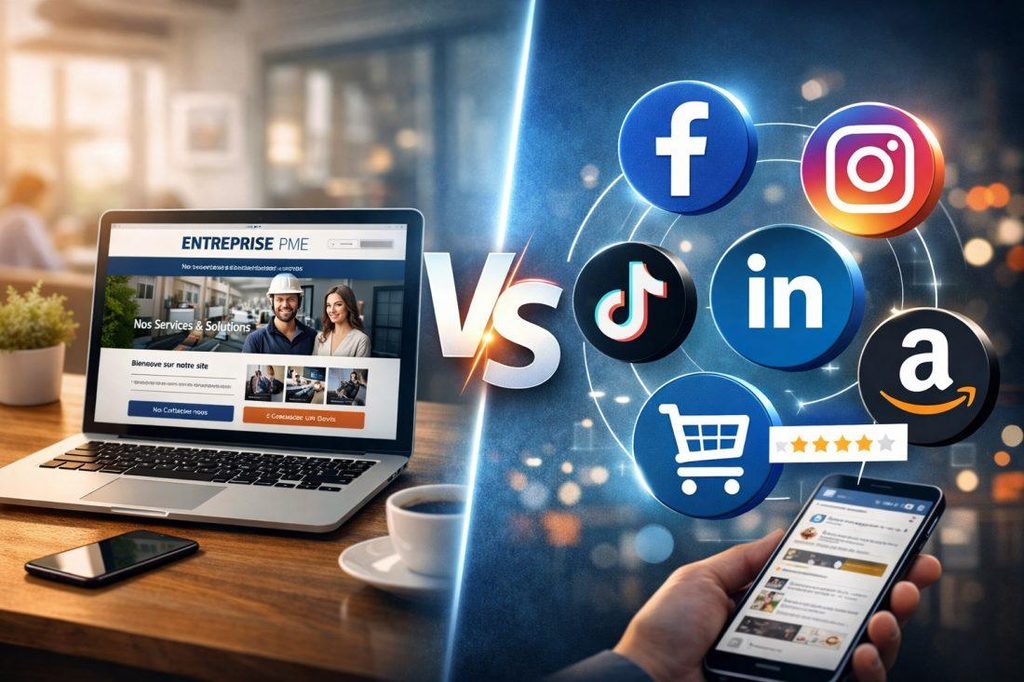
1. Facebook Is Great for Conversations, but Your Business Needs More Than Conversations
Facebook has helped many entrepreneurs connect with customers without making a significant initial investment.
Through business pages, companies can share announcements, promote products, and respond directly to inquiries.
For example, a local bakery might use Facebook to showcase its latest cakes. Meanwhile, a cleaning company could share before-and-after photos to demonstrate its services.
These activities help businesses remain visible and approachable.
However, social media isn’t always the most convenient place to organize detailed business information.
Imagine someone visiting your Facebook Page for the first time. They want to understand what you offer, compare services, review your previous work, and find your contact information.
Unfortunately, important details may be scattered across old posts, photo albums, and Messenger conversations.
As a result, potential customers might struggle to find what they need.
A professional website solves this organizational problem by presenting essential information in one accessible location.
Instead of searching through dozens of posts, visitors can navigate clearly organized pages and learn about your business at their own pace.
2. Facebook Page vs Website: What’s the Difference?
Although both platforms support your online presence, they offer different advantages.
A Facebook Page is useful for engaging with customers, while a professional website gives your business more control over its information, branding, and inquiry process. Many growing businesses benefit from both, but the right choice depends on their needs and budget.
| Facebook Page | Business Website |
|---|---|
| Ideal for conversations and community engagement | Ideal for organized business information |
| Useful for posting updates and promotions | Useful for presenting services and portfolios |
| Supports comments and Messenger inquiries | Can support contact forms and online bookings |
| Uses Facebook’s platform and layout | Offers greater control over branding and design |
| Can appear in search results | Can target relevant searches through dedicated pages |
| Depends on Facebook’s available features and policies | Can support integrations and additional business tools |
Think of Facebook as a place where customers discover and interact with your business.
Your website, meanwhile, works as your digital headquarters.
Together, they can create a more complete customer experience.
3. 5 Benefits of Using a Facebook Page and Website Together
Reason 1: Build a More Professional Online Presence
First impressions matter, particularly when customers are comparing several businesses.
While an active Facebook Page helps demonstrate that your business is accessible, a professional website gives you more space to communicate your identity.
For instance, you can create dedicated pages for your company background, services, portfolio, and customer testimonials.
Furthermore, a consistent design helps visitors recognize your brand across different channels.
A professional website doesn’t automatically make a business trustworthy. Nevertheless, accurate information, useful content, and transparent contact details can help potential customers evaluate your credibility.
The benefit: Customers have a dedicated place to understand who you are and what your business offers.
Reason 2: Increase Opportunities to Be Found on Google
Not every potential customer searches for businesses through Facebook.
Many people use Google when looking for a particular service or solution.
For example, someone might search for:
- Website development services for small businesses
- Accounting services near me
- Professional home cleaning services
- Business consultants in the Philippines
- Online booking services for local businesses
A properly structured website allows you to create pages that address these searches.
Additionally, helpful articles and frequently asked questions can introduce your business to people researching a particular problem.
However, simply launching a website doesn’t guarantee high rankings or immediate traffic. Search visibility requires relevant content, technical accessibility, and ongoing improvement.
For practical guidance, refer to Google’s official SEO Starter Guide.
The benefit: Your business gains more opportunities to connect with people searching for relevant products or services beyond social media.
Reason 3: Make Business Information Easier to Find
How often do customers ask the same questions?
“How much does your service cost?”
“Where is your office located?”
“What services do you offer?”
“How can I book an appointment?”
Although these questions are important, answering them repeatedly can consume valuable time.
Fortunately, a well-organized website can provide many of these answers before customers contact you.
For example, a service business might include a detailed services page, frequently asked questions, and a simple inquiry form.
Customers can then review the information independently and contact your team when they need further assistance.
Consequently, conversations may become more focused because potential customers already understand the basic details.
The benefit: Clear information can reduce repetitive questions and make the inquiry process more convenient.
Reason 4: Have Greater Control Over Your Digital Presence
Social media platforms are useful, but businesses don’t control every aspect of their operation.
Platform policies, available features, layouts, and account access requirements can change.
Therefore, depending entirely on one platform may limit how you present information and manage the customer experience.
A professional website provides greater flexibility.
For example, you can decide how your services are displayed, which information appears first, and how customers submit inquiries.
You can also establish your own website address using a domain name associated with your business.
Still, this independence comes with responsibilities. Websites require hosting, updates, backups, security measures, and maintenance.
Before launching, make sure you understand who controls your domain registration, hosting account, and website files.
For additional guidance on creating useful website content, explore Google’s recommendations for helpful, reliable content.
The benefit: You gain more control over your business information, presentation, and customer journey.
Reason 5: Create More Opportunities for Future Growth
A business website doesn’t have to remain a simple online brochure.
As your operations develop, additional features can help support new customer and business needs.
For instance, you might eventually introduce:
- Online appointment requests
- Contact and quotation forms
- Service catalogs
- Product ordering
- Lead management integration
- Customer support forms
- Workflow automation
However, adding every available feature isn’t necessary.
For most small businesses, the better approach is to start with a practical website that solves immediate problems.
Later, you can introduce more advanced functionality when there’s a clear operational or financial benefit.
The benefit: Your website can grow alongside your business without requiring unnecessary complexity from the beginning.
4. When Is a Facebook Page Enough?
Not every small business needs to invest in a website immediately.
For example, an entrepreneur testing a new product may find Facebook sufficient for receiving initial orders and gathering customer feedback.
Similarly, a home-based seller with a limited budget might benefit more from improving product quality, photography, and customer service before investing in a website.
In these situations, Facebook remains a practical starting point.
Nevertheless, the decision may change as the business grows.
Customers might begin asking for detailed service information, online appointments, or a professional company profile.
At that stage, having a website becomes more valuable.
The goal isn’t to invest in more technology. It’s to invest in technology that solves an actual business problem.
5. Five Signs Your Business May Be Ready for a Website
Before deciding, consider these questions.
1. Do customers repeatedly ask for the same information?
If important details are difficult to find, a website could help organize them.
2. Do you want to reach customers beyond Facebook?
Dedicated website pages can provide additional opportunities for search visibility.
3. Does your business need a professional portfolio or company profile?
A website makes it easier to present your capabilities, services, and experience.
4. Are you having difficulty organizing customer inquiries?
Forms and structured contact pages may simplify how inquiries are received and managed.
5. Are you preparing to expand your business?
A website can provide a foundation for additional services, locations, or business tools.
If you answered yes to several questions, it may be worth exploring a professional website.
However, the right size and scope should depend on your actual requirements.
6. What Should Your First Business Website Include?
A small business website doesn’t need dozens of pages to be useful.
In many cases, five essential pages provide a strong starting point.
Home Page
Clearly introduce your business, explain what you offer, and guide visitors toward the next step.
About Us
Share your company background, experience, values, and what makes your business different.
Services or Products
Present your offerings in an organized way so customers can easily understand their options.
Contact Page
Provide convenient contact methods, including inquiry forms, email addresses, or business phone numbers.
Privacy Policy
Explain how personal information is collected, processed, and handled, particularly when your website uses contact forms or analytics tools. The policy should reflect your actual practices and applicable legal requirements.
Additionally, some businesses may benefit from a portfolio, testimonials, FAQ section, or blog.
Start with what your customers actually need. Then expand based on evidence and business priorities.
7. The Smarter Approach: Let Facebook and Your Website Work Together
Instead of choosing between Facebook and a website, consider how both can support the same customer journey.
Here’s a practical example:
Step 1: Attract attention through Facebook.
Share helpful tips, announcements, customer stories, and relevant promotions.
Step 2: Guide interested people to your website.
Link directly to a relevant product, service, or information page.
Step 3: Give customers the details they need.
Allow visitors to explore your services, review your background, and find answers to common questions.
Step 4: Make inquiries easy.
Provide a clear contact form, booking option, or quotation request.
Step 5: Follow up and provide assistance.
Respond to inquiries promptly and help customers decide on their next steps.
As a result, Facebook continues building relationships while your website provides a more structured experience for interested customers.
This approach is often more practical than relying on either platform alone.
Frequently Asked Questions
Is a Facebook Page enough for a small business?
Yes, especially for businesses that are just starting or primarily handle sales through social media. However, a website becomes more useful when customers need organized information, additional contact options, or detailed service pages.
Does my business need both Facebook and a website?
Not necessarily. The right combination depends on your customers, budget, and business goals. For many growing businesses, using both channels can provide complementary benefits.
Will a website automatically attract more customers?
No. A website creates opportunities for search visibility and customer inquiries, but results depend on content quality, marketing, competition, user experience, and ongoing improvements.
Can I build a website even if my business is small?
Absolutely. Small businesses can begin with a simple website featuring essential company information, services, and contact details. Additional features can be introduced later.
How much does a professional business website cost?
Website development costs depend on design requirements, content, functionality, and ongoing services. A basic informational website typically requires less development work than an e-commerce platform or custom business application.
Remember to consider hosting, domain registration, security, maintenance, and future improvements when planning your budget.
Can I keep my Facebook Page after launching a website?
Yes. In fact, maintaining both can be beneficial. Facebook supports customer engagement and promotions, while your website provides organized information and additional opportunities for inquiries.
Final Thoughts: Your Facebook Page Is a Starting Point, Not Necessarily Your Final Destination
Facebook offers a convenient way to connect with customers, promote your offerings, and build relationships.
However, as your business develops, you may need a more organized and flexible online presence.
A professional website can help you explain your services, strengthen your brand presentation, and simplify how customers interact with your business.
Most importantly, you don’t need to invest in complicated technology immediately.
Start with what matters to your customers and introduce additional tools when they provide genuine business value.
Your business doesn’t need more technology for its own sake. It needs the right technology to support its growth.
Not Sure If Your Business Needs a Website?
You don’t need to invest in a complicated website to establish a professional online presence.
At ArdyOnline, we help small businesses and professionals choose practical website solutions that match their goals, budget, and stage of growth.
Whether you’re starting from a Facebook Page or improving an existing website, we can help you identify the right next step.
Let’s discuss your business goals and find out what makes sense for you.
Contact ArdyOnline
ArdyOnline — Helping Businesses Grow, Stay Secure, and Work Smarter Online.